
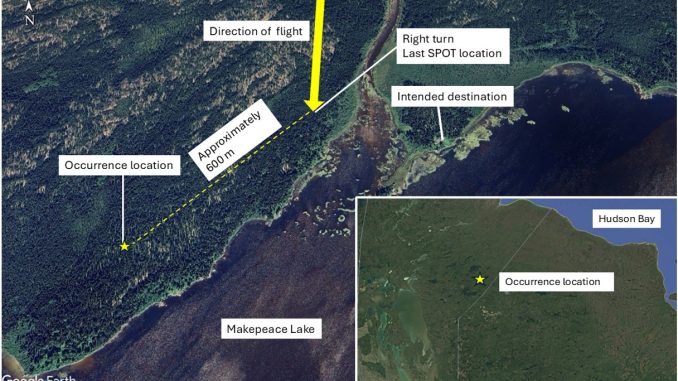
The September 13, 2025, crash of a Beaver floatplane in Northeastert Manitoba could have been due to the centre of gravity (CG) being aft of the rear limit, according to the TSB’s incident report issued last week (Nov. 19). However, a post-crash fire made it impossible for the TSB investigators to determine the exact cause.
The de Havilland Canada DHC-2 Mk. 1 Beaver (C-FDPW) went down near Makepeace Lake, its destination. All four passengers were killed but the pilot survived with burns.
The Beaver had several authorized modifications done to it and the TSB investigators calculated that the CG was 3.1 inches aft of the rear limit. According to the report, the aircraft operator noted the discrepancy after loading the aircraft for the flight but assumed it was an error in the empty CG calculation. The takeoff weight prior to takeoff was within limits.
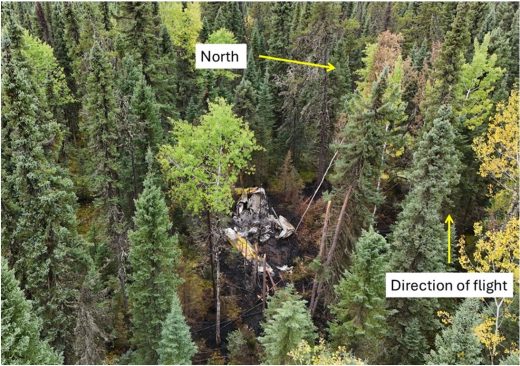
The crash pattern indicated that it descended at a steep angle. Given the nature of the crash, the TSB suspects the cause was an aerodynamic stall. However, the report does not make that conclusion since the Beaver’s historical weight and balance records were destroyed in the post-crash fire.
The report also highlights an official recommendation (A18-01) it made eight years ago calling for Transport Canada (TC) to mandate that lightweight data recorders (LDRs) be installed by both private and commercial operators in aircraft that currently are not required to have them. Given inaction by TC on this matter, the TSB has officially designated TC’s response to be “Unsatisfactory” and has classified the recommendation as “Dormant”.
The full TSB report is appended below.
Be the first to comment