
De Havilland Aircraft of Canada (DHC) is calling on the federal and/or provincial governments to order a fleet of 50 Canadair DHC-515 water-bombers. Doing so would allow the company to set up a second production line at their new assembly plant east of Calgary.
The company is facing soaring demand for its water-bombers from European countries. The model, previously named the CL-515, is a turboprop-powered, and otherwise upgraded version of the original Canadair CL-215 and CL-415. It purchased the type certificate from Bombardier in 2015.
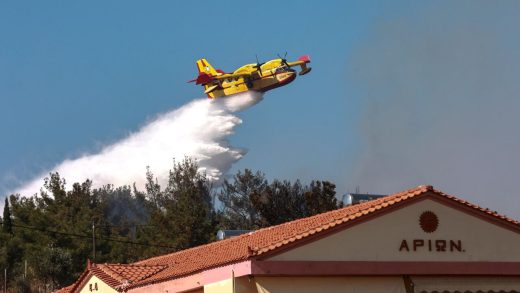
De Havilland said it is struggling to meet demand for the DHC-515, also known by the moniker Super-Scooper. If governments in Canada were to place an order for 50, that would justify DHC setting up a second production line, according to Neil Sweeney, the company’s vice-president of corporate affairs.
“If we want to stop fires from becoming large and becoming megafires, we need to get on them quicker,” said Sweeney. “And the only way to get on them quicker is to have the infrastructure to do so.”
Sweeney says if DHC can’t meet overseas demand on a timely basis, other manufacturers may enter the market. “We can’t afford to wait any longer,” Sweeney said.
“The danger of a slow ramp-up here is that the scarcity creates its own competition,” said Air Canada’s former director of corporate development Christopher Read. “If it can’t turn that into delivered aircraft quick enough, customers won’t wait. They will find alternatives.”
Three companies are reported already developing water-bombers: Positive Aviation, Kepplair Evolution and Hynaero, all from France.
“There are a number of people that have ideas and are looking for backing in order to bring another one into production,” added Sweeney. “That’s always a risk, that there’s a competitor. But at this point, we are the only large scooping aircraft in production.”
De Havilland Canada has produced the video below on the DHC-515 manufacturing process.
Be the first to comment